Emergency Help
 Location
ORTHODONTIC TREATMENTS
Braces
Braces to best suit your needs.
What Are Dental Braces?
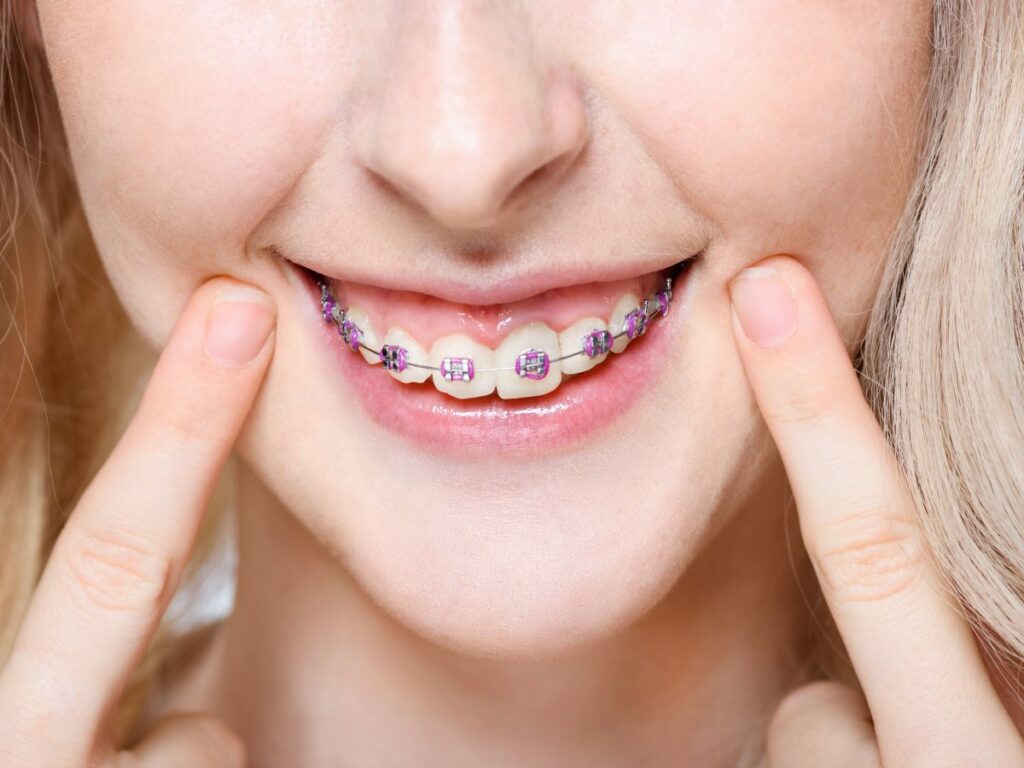
Dental braces or orthodontic braces are devices used in orthodontics that align and straighten teeth and help position them about a person’s bite, while also aiming to improve dental health. Braces can be either cosmetic or structural. Dental braces are often used in conjunction with other orthodontic appliances to help widen the palate or jaws and to otherwise assist in shaping the teeth and jaws.
Causes Of Malocclusion
Occlusion refers to the alignment of teeth and the way that the upper and lower teeth fit together (bite).
Malocclusion is most often hereditary. It causes tooth overcrowding or abnormal bite patterns. The shape of the jaws or birth defects such as cleft lip and palate may also be reasons for a malocclusion.
Other causes include:
- Childhood habits such as thumb sucking, tongue thrusting, pacifier use beyond age 3, and prolonged use of a bottle
- Extra teeth, lost teeth, impacted teeth, or abnormally shaped teeth
- Ill-fitting dental fillings, crowns, dental appliances, retainers, or braces
- Misalignment of jaw fractures after a severe injury
- Tumors of the mouth and jaw
Why Do You Need The Orthodontics Treatment?
Do I Need Braces?
- Abnormal alignment of teeth
- Abnormal appearance of the face
- Difficulty or discomfort when biting or chewing
- Speech difficulties (rare), including lisp
- Mouth breathing (breathing through the mouth without closing the lips)
- Inability to bite into food correctly (open bite)
Who Needs The Procedure?
Malocclusion is the dental term for misaligned teeth that can come in nine different types:
Braces are necessary when one faces one or more of the following issues:-
Pros And Cons Of The Braces
Pros
Cons
- Beautiful, Straight Teeth - A straight smile is a healthy one, with minimized chances of developing tooth decay, gum disease, periodontal disease, and more.
- Enhances Oral Health - If the problem is never addressed, the risk of tooth decay and other oral diseases can heighten, Improve Your Self-Confidence and Self-Esteem
- Braces Can Be Very Noticeable
- They Can Be Difficult to Clean
- Braces trap food far easier than your teeth do
- Braces are an expensive proposition.
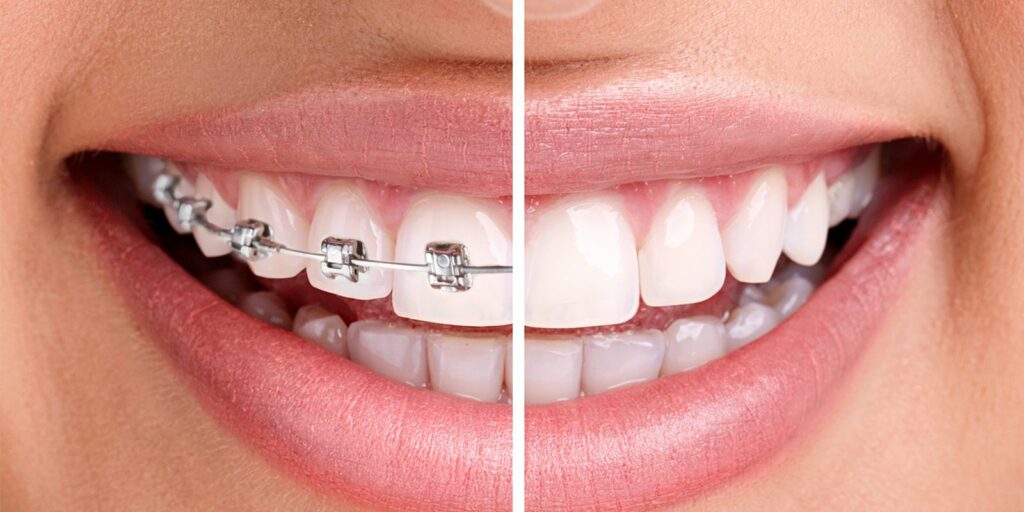
Orthodontic Braces: Before and After
What Are The Types Of Braces?
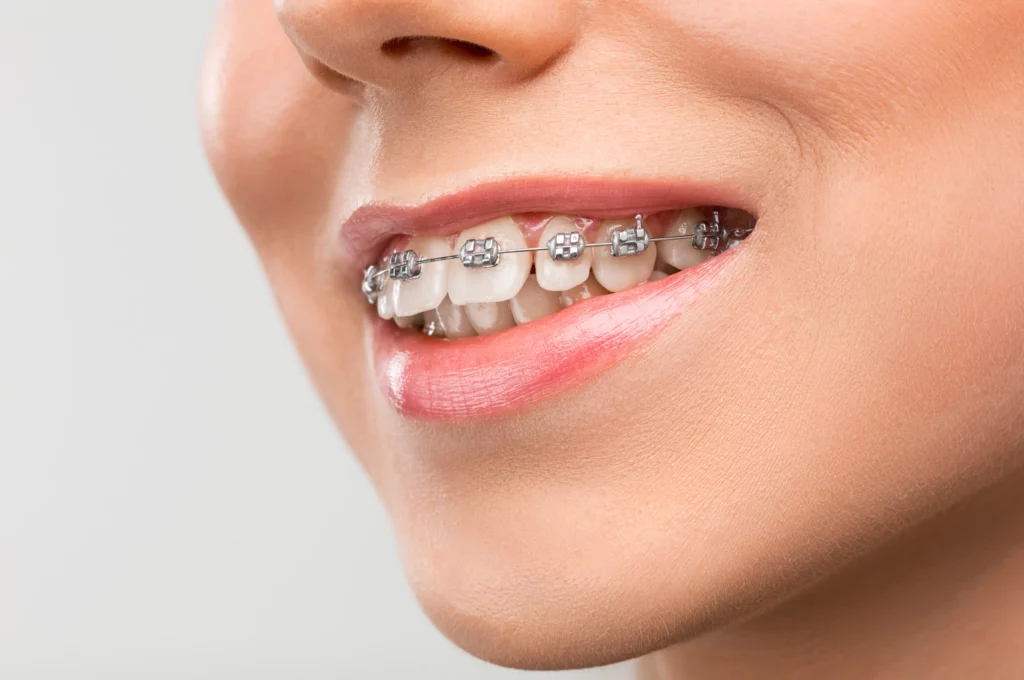
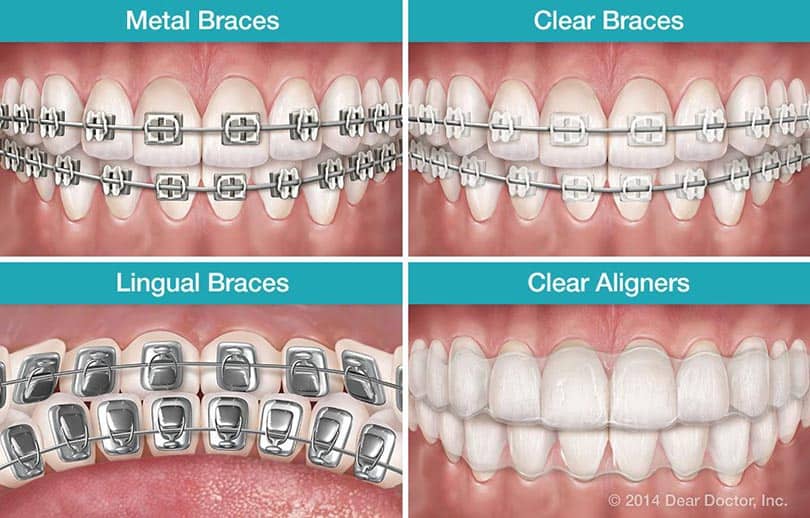
- Metal braces: Metal braces use stainless steel bands, brackets, and wires to gently shift your teeth over time. A dentist or orthodontist will bond (glue) a bracket on each tooth, then place a thin, flexible archwire over the brackets. Tiny elastic bands called ligatures keep the wire firmly in place. Metal braces are visible when you smile.
- Ceramic braces: It is also sometimes called clear braces and works the same way as metal braces. The key difference is that the brackets, wires, and ligatures are tooth-colored, so they blend in with your smile. Ceramic braces are still visible, but they’re less noticeable.
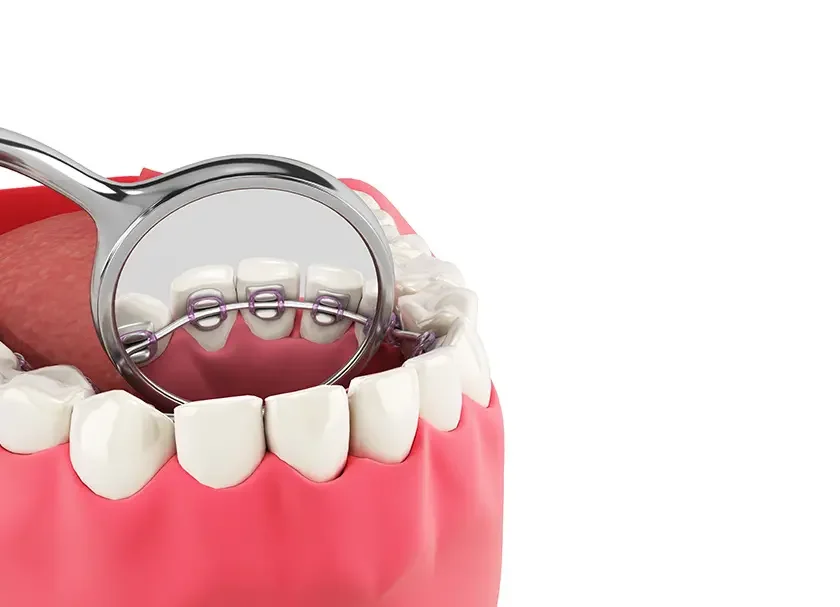
- Lingual braces: It is similar to traditional braces. But they go on the back surfaces of your teeth instead of the front. Most people who choose lingual braces do so because they don’t want other people to be able to tell they have braces.
- Self-ligating braces: Self-ligating braces look similar to traditional metal braces. The main difference is that, instead of ligatures (tiny elastic bands), self-ligating braces use a built-in system to hold the archwire in place.
- Clear aligners: Clear aligners are also referred to as Invisible braces. Instead of brackets and wires, clear aligners use a series of custom-made trays to straighten your teeth over time.
Consultation
Procedure
Bonding Stage
This is the stage when you are fitted with braces. This is a very intricate process where the brackets are placed on your teeth.
After brackets are placed and the wire is fitted, the patient will have the freedom to choose color elastics. For patients who are candidates for clear aligners, attachments are placed on the teeth, and aligners are fitted to make sure they are perfect.
Oral hygiene and proper care will be discussed no matter the type of treatment and we will send you home with all the instructions and tools you need to make your smile stellar!
Regular Adjustments Stage
This stage consists of routine appointments typically every 6-8 weeks that enable your orthodontist to monitor progress and make adjustments. Braces are adjusted, colored elastics are changed, clear aligners are checked for accuracy, and progress is recorded.
Debonding Stage
After all the hard work, this is the stage where braces are removed or the last round of aligners is finished. Brackets are removed, the teeth are polished and final photographs are taken. An impression is also taken for the final removable.
How Should I Care For My Braces?
- Brush your teeth at least twice a day using a soft-bristled toothbrush and fluoride toothpaste.
- Floss between your teeth and around your braces once a day. (Ask your dentist or orthodontist about special floss for braces.)
- If you have clear aligners, clean them every day and store them properly when you’re not wearing them.
- Swish with an alcohol-free, antibacterial mouthwash twice a day.
- Avoid hard, crunchy, or sticky foods.
- Visit your orthodontist regularly for tightening and maintenance.
- Visit your dentist regularly for cleanings and routine dental care.
- Pasta
- Cooked vegetables.
- Mashed potatoes.
- Scrambled eggs.
- Yogurt.
- Soup
- Soft fruits.
- Oatmeal.
Taking Care After Braces Treatment
How can I maintain my results after braces?
Anyone who wears braces will need to wear a teeth retainer when they’re done with treatment. A retainer prevents your teeth from shifting back into their old positions.
There are many types of retainers. Your dentist or orthodontist will help choose one that’s right for you.
Retainer Stage
After the initial delivery of the retainers, an appointment will be set for further progress monitoring. Tightening and adjustments can be performed in this final stage to ensure your retainer is a perfect fit.
What Are The Normal Side Effects Of Braces?
- Temporary discomfort (which usually occurs the first day and any time your dentist tightens your braces).
- Irritation on your tongue, lips, or inner cheeks.
- Jaw pain.
- Difficulty eating (especially after a tightening).
FAQ's
What is orthodontics?
What is an orthodontist?
What’s the best age to visit the orthodontist?
If you want to improve the look and feel of your smile, then any age can be a great time to see an orthodontist. The American Association of Orthodontists recommends that children first visit an orthodontist around the age of seven; however, orthodontic treatment is not exclusive to children and teens.
About one in every five orthodontic patients is over the age of 21. (Dr. Willes has even improved the smiles of patients in their 80s!) Whether you’re considering treatment for yourself or a child, any age is a good time to visit the orthodontist.
How can I take care of my teeth if I’m wearing braces or a retainer?
- Always remember to brush your teeth after every meal and floss at least once a day.
- Make sure to use toothpaste that contains fluoride, and ask your family dentist if you need a fluoride rinse. This will help prevent cavities!
- If you take out your retainer to eat, make sure you brush your teeth, and floss, and remember to keep your retainer safe in its container so that it does not get lost or broken.
- Keep your retainer clean, too, by brushing it gently with a toothbrush and toothpaste. You may also soak it in denture cleaner. Do not put your retainer in boiling water or the dishwasher.
- During your treatment, try to avoid foods with a lot of sugar, which increases the bacteria that grows in your mouth, and can cause more plaque and potential cavities.
- Avoid sticky and chewy foods (caramel, chewing gum, gummy bears), hard foods (hard candy, nuts, ice cubes), or any foods that could get stuck in your braces (corn on the cob, bagels, ribs, taffy, etc.).
- Be sure to schedule your routine checkups with your family dentist. It is recommended that you continue to visit the dentist every six months.
Do braces hurt?
Do I need to brush my teeth more often if I have braces?
Regain Your Happy Smile in Healthy Way
Our Accomplishments