Emergency Help
 Location
ORTHODONTIC TREATMENTS
Invisalign
When it comes to teeth, we can set things straight
What is Invisalign?
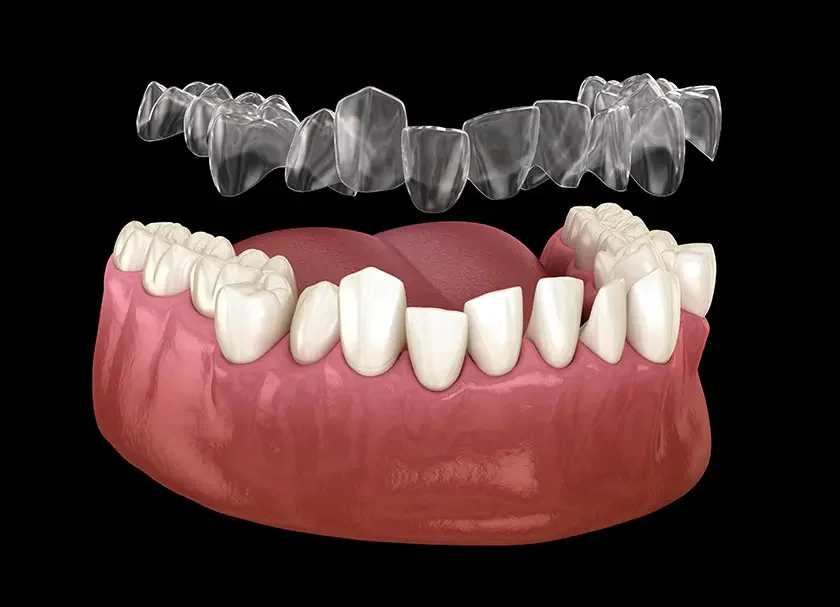
Invisalign is an orthodontic treatment that involves wearing custom-made, transparent aligners that are used to move and properly straighten the teeth, resulting in a flawless smile. Invisalign aligners do not have any brackets or metal wires like conventional braces.
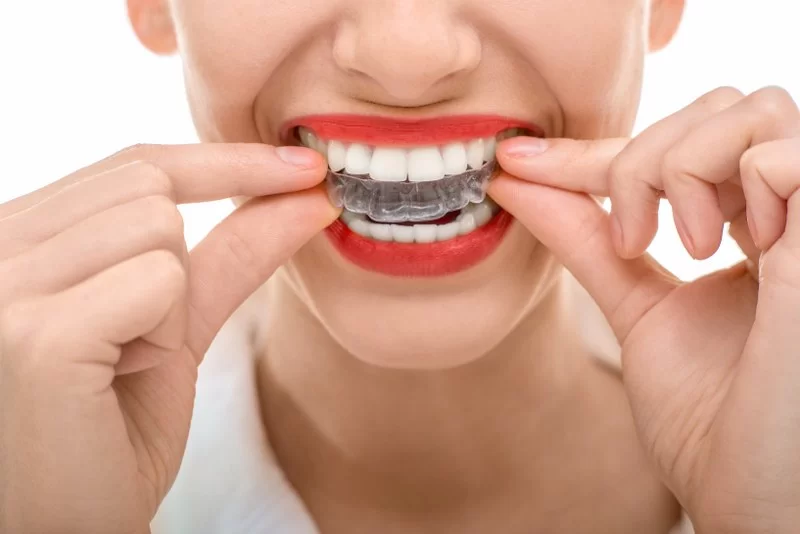
The aligners are computer-generated as per the mold of every patient’s teeth and often remain unnoticed as they are transparent. While brushing or eating food, you should remove the clear aligners and put them back the other time.
Who needs the procedure
- Do You have a fairly straightforward crowding or bite issue with my teeth?
- Do You feel self-conscious about wearing braces?
- Will You wear the aligners for the appropriate number of hours every day?
- Can You afford them?
- Will You take care of them correctly?
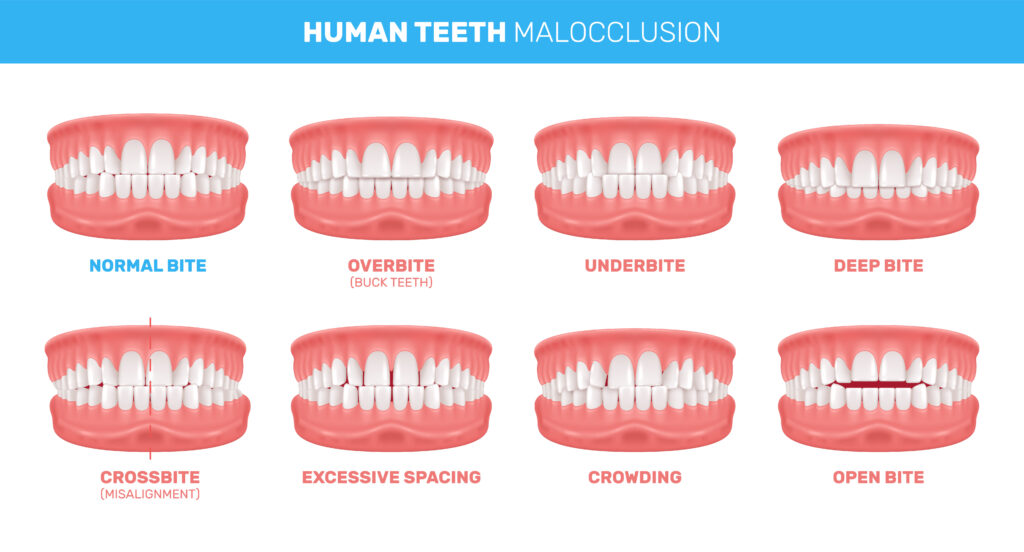
What Orthodontic Issues Can Invisalign Fix?
Malocclusion is the dental term for misaligned teeth that can come in nine different types:
Braces are necessary when one faces one or more of the following issues:-
Pros and Cons Of Invisalign
Pros
Cons
- The aesthetic factor. - This is a very commonly cited reason for choosing Invisalign. These clear aligners are much less noticeable than the wires and brackets of braces.
- You can remove them - You can physically remove the aligner from your mouth if you need to.
- Ease of cleaning your teeth - By removing the aligner, you can easily brush and floss your teeth, without having to work around wires and brackets.
- Fewer potential problems - Many people with traditional braces have stories about a bracket that fell off or a wire that broke, leading to an emergency visit to the orthodontist. You won’t have that potential problem with clear aligners.
- Less effective for complex issues - Additionally, if you have bridgework on some of your teeth, Invisalign might not be the right option for you.
- Requires compliance. - To get the maximum benefit from Invisalign, you must wear the aligners for 20 to 22 hours a day.
- Removal when eating or drinking - When you’re eating or drinking, you need to take the aligners out. If you don’t, food or drink can get into them. This causes bacteria to grow along your teeth or gumline, which could lead to cavities.
- Food limitations - You may experience tooth soreness when the aligner is removed, which can limit your food choices. Hard foods, especially, should be avoided.
What’s involved with wearing them?
During the Procedure
The dentist will then use that plan to create a series of customized plastic aligners. These aligners will apply pressure to your teeth, gradually shifting them and moving them into the desired places.
Depending on your orthodontist’s instructions, you’ll switch out one set of aligners for a new set about once every week or two. Typically, you’ll need to wear the aligners for 20 to 22 hours a day.
What Can I Expect After Invisalign Braces?
Taking care after the procedure
For Invisalign to work effectively, it’s important to wear the aligners for 20 to 22 hours per day.
The only time you’re supposed to remove the aligners is when you’re:
- Eating or drinking
- Brushing or flossing your teeth
- Cleaning your aligners
FAQ's
Age limit for Invisalign treatment
Am I the right candidate for Invisalign treatment?
How will Invisalign treatment help me?
If you are constantly conscious about your misaligned teeth which keep you from smiling with all your heart.
It fixes crooked or misaligned teeth, but it also fixes crowded teeth which will allow you to clean your teeth properly, preventing you from further oral problems.
How much time is required in Invisalign for the proper fix?
Regain Your Happy Smile in Healthy Way

Our Accomplishments